The annual protest at the School of the Americas (now called Western Hemisphere Institute for Security Cooperation) will take place this weekend at Fort Benning in Columbus, GA.
Here is a short film about its background:
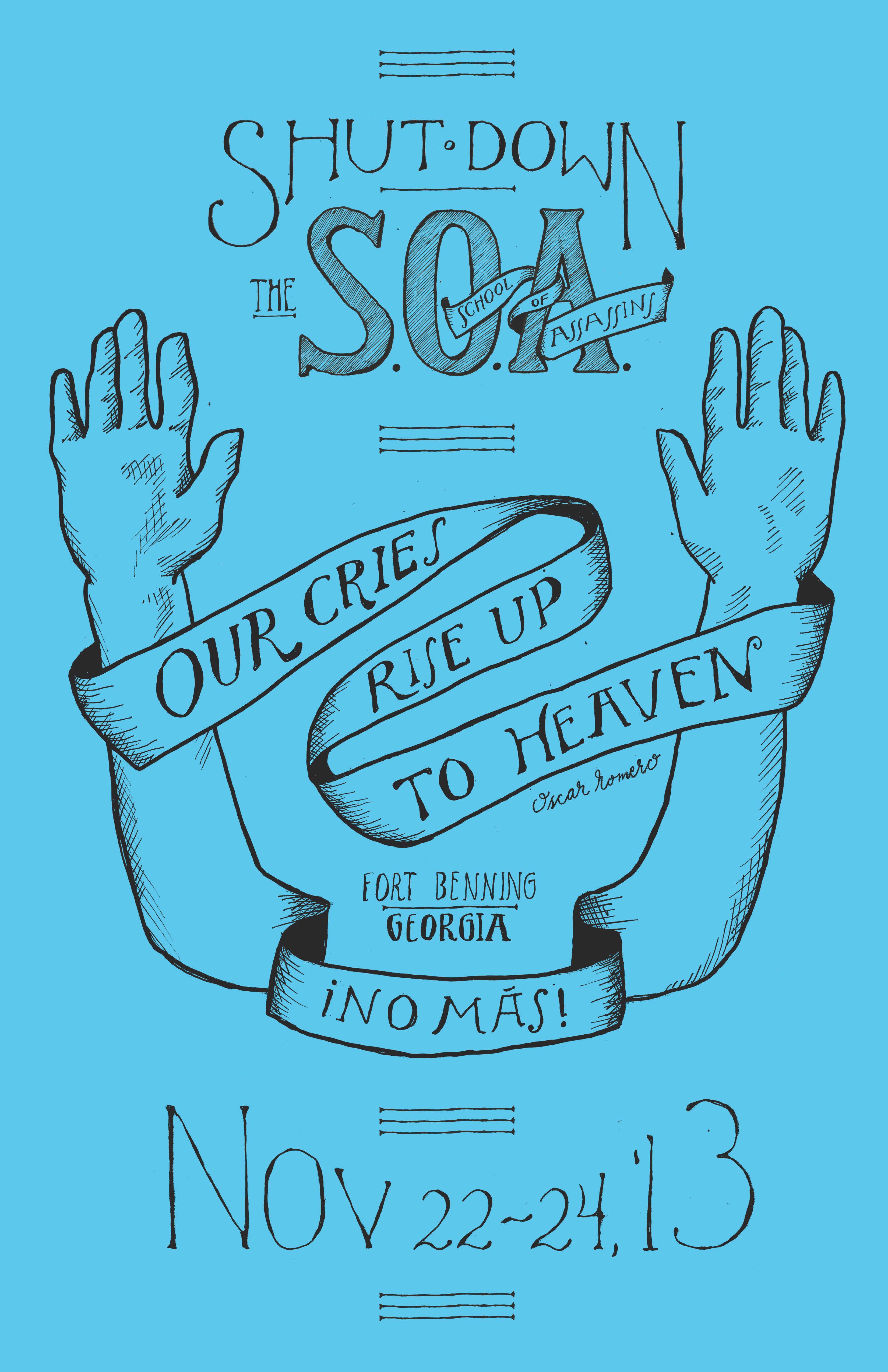
The annual protest at the School of the Americas (now called Western Hemisphere Institute for Security Cooperation) will take place this weekend at Fort Benning in Columbus, GA.
Here is a short film about its background:
Oscar Romero’s assassins were members of Salvadoran death squads, including two graduates of the School of the Americas. The 1993 United Nations Truth Commission report on El Salvador identified SOA graduate Major Roberto D’Aubuisson as the man who ordered the assassination.
▶ Blessed Oscar Romero’s last sermon – YouTube
Here is the full text.

I had a nice evening last night with an Air Force reservist, S., who is leaving for Afghanistan in a number of weeks. S. is also a Christian (Baptist). I was trying to convince him not to go. Knowing he had joined ROTC at the age of 14 and been involved in the military ever since, the task was daunting. Nevertheless, I tried! We had a good discussion. Needless to say, two hours wasn’t enough to convince him. I said that if I couldn’t convince him to refuse, that I might have to chain myself to him on his day of departure, so he can’t board the plane, like environmental activists chain themselves to trees to prevent them from being cut down. If I fail in courage to do so (I probably will), and S. goes to Afghanistan (he probably will), then S. and I agreed to try to attend the Georgia / Georgia Tech game together on November 29, 2014, to celebrate his return sometime next year.
S., I’m glad to know you. I appreciate your openness towards me and my ideas. This seems like a good prayer for today:
Jesus, loving companion of Your children,
You have extended Your friendship to all.
You opened Your arms without discrimination,
Offering Your warmth to those seeking comfort.
Endow me with the virtue of such a friendship,
To know, love and trust all on an equal basis;
To share my patronizing without favoritism,
And to be pleasant towards the destitute.
Fashion my heart to reflect Your qualities,
Those befitting of a cordial association.
Jesus, You showed me the way to true friendship:
Blessed is Your amazing and warm Person!
Go, Dawgs.
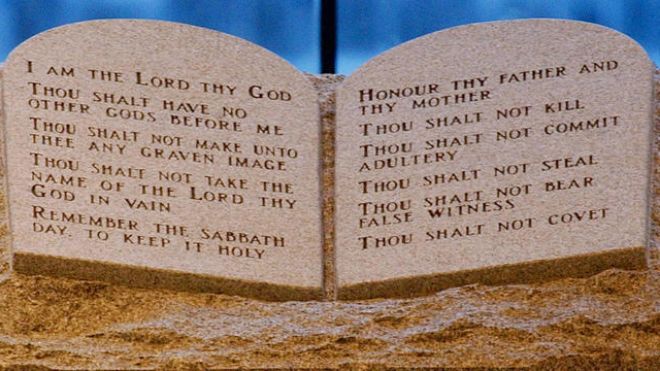
Church leaders in Detroit push ‘Thou shalt not kill’ message in wake of violence | Fox News
They are putting up billboards with “Thou shalt not kill” on them. We’re thinking American churches might have a small credibility problem trying to relay this message.


Constantine the Great by Charlesdrakew (Own work) [Public domain], via Wikimedia Commons
(Confused? Here is an example of an Internet meme. Have fun!)
If you listen to the lyrics, “Born in the U.S.A.” is about the troubles of a young working class man who is sent to the Vietnam War and his troubles that continue upon his return. The Reagan administration, wanting to capitalize on its popularity but perhaps misunderstanding its message, asked if they could use it for their reelection campaign. Springsteen said, “No.” Springsteen was raised Catholic but we don’t believe he is practicing.
Some recommended articles:
Flannery O’Connor’s Mark on Bruce Springsteen
Springsteen Can’t Hide His Catholic Past
The Catholic Imagination of Bruce Springsteen
Born down in a dead man’s town
The first kick I took was when I hit the ground
You end up like a dog that’s been beat too much
Till you spend half your life just covering up
***
Got in a little hometown jam so they put a rifle in my hand
Sent me off to a foreign land to go and kill the yellow man
Come back home to the refinery
Hiring man says “son if it was up to me”
Went down to see my V.A. man
He said “son don’t you understand now”
Had a brother at Khe Sahn fighting off the Viet Cong
They’re still there he’s all gone
He had a woman he loved in Saigon
I got a picture of him in her arms now
Down in the shadow of penitentiary
Out by the gas fires of the refinery
I’m ten years burning down the road
Nowhere to run ain’t got nowhere to go
Born in the U.S.A.
I was born in the U.S.A.
Born in the U.S.A.
I’m a long gone daddy in the U.S.A.
I’m a cool rocking daddy in the U.S.A.
For the last few days we’ve had a chance to peruse the comments threads on various websites where people are chiming in about CAM’s initiative, described in a recent article in the National Catholic Reporter. There’s been some confusion about why we encouraged Catholics to put statements of protest in the collection basket. Critics accused us of “attacking” the military chaplaincy and trying to “deny” sacraments and pastoral care to Catholics in the military. Neither of these charges is true.
1) To reiterate: The collection was accompanied by militaristic sermons and appeals in Catholic churches across the United States, with priests and laypeople honoring the military for keeping us “free” and “safe.” Behind the campaign’s message lies an assumption that America’s wars are good and necessary to keep us free and safe, a comforting myth but a debatable assumption. This campaign shamelessly capitalized on and took advantage of one of America’s greatest sins: idolatrous nationalism. In its imagery and advertising, slogans and sentimental appeals, it discouraged serious reflection on America’s foreign policy, the moral gravity of war, and the appropriateness of Catholics serving in the military, especially in wars such as these. In short, militaristic propaganda has no place in the House of God.
2) Let’s keep in mind this was the first ever collection for AMS. AMS managed to survive for almost 30 years without this collection. To say our efforts were an “attack” that posed an actual threat to AMS was a bit alarmist. Even if nobody gave a dime, AMS would still be in the exact same position they were in last year. They’d probably just throw a fundraiser, invite a bunch of beltway Catholic neocons with stock in the arms industry, play some golf, pray for the troops, smoke some cigars and cha-ching! Problem solved. Nothing in the public record suggests that Catholics in the military would lose access to the sacraments or pastoral care without this collection.
3) Military personnel receive a salary, free health care, free food, free or subsidized housing, family pay, education benefits, enlistment and re-enlistment bonuses, a noncontributory retirement plan, tax-free and hazardous duty pay if deployed to a combat zone, and a lifetime of benefits if they get seriously injured in the line of duty. These people are professionals, not charity cases. The Archdiocese of the Military has to raise about $5.5 million in private donations annually; the U.S. military has about 360,000 Catholics on active-duty; that’s about $15-$20 per year per Catholic. They should be able to pay for their own Archdiocese.
4) Furthermore, these funds pay for more than sacraments and pastoral care for men on the front lines of combat. Much of yesterday’s collection will be used to pay for the $1.8 million mortgage on the archdiocesan headquarters in Washington’s expensive Brookland neighborhood. There also seems to be a lot of money that goes toward AMS’s educational and formation materials, which is kind of scary. (What do their materials say? “Love your enemies,” with an asterisk and a footnote at the bottom: unless a government tells you to kill their enemies, but only if it’s the American government, because if another government tells you to kill their enemies, especially if their enemies are Americans, then killing is evil. Sheesh. We haven’t even gone there yet.)
5) Reality check: Only 4 to 10 percent of military personnel are trained combat troops; the rest have normal jobs in logistics, training, administration, and so forth. If you join the military, you have a 0.02 percent chance of dying in combat. We have over 900 bases around the world! On AMS’s slick marketing poster, however, some soldiers in fatigues are, of course, attending Mass in a desert rather than in a quiet suburb of Munich. I suppose it’s more emotionally resonant that way. We wonder who their ad agency is.
One definition of militarism is “the tendency to subordinate all interests to those of the military.” We are in the worst economic times since the Great Depression. America has a record number of people out work, a health care crisis, and record amounts of consumer, household, and government debt. All kinds of Catholic organizations are desperate for funds. On top of the taxpayer-funded compensation, Americans donate tens of millions of dollars to veteran’s charities every year. Soldiers and veterans also benefit from special discounts at many stores, preferential hiring from some companies, and never-ending public displays of appreciation and gratitude from a supportive and sympathetic public. Since every Catholic has a limited amount of money to give to various groups and causes, the Archdiocese of the Military should be low on the priority list, especially for any Catholic who opposes America’s wars and militarism inside the Church.
If you want to help people negatively affected by war, we suggest making a donation to War Child International or some other organization that helps the innocent victims of war. Civilian casualties in Iraq outnumbered U.S. military casualties by at least 30-to-1. Unlike U.S. military personnel, these civilians lack access to top-notch medical care and never chose war as a career path. The U.S. government invaded Iraq under false pretenses, completely destroyed its infrastructure, and unleashed mass chaos that killed 600,000 people (including more than 1,000 Christians). Violence continues to rise Iraq, with 1,370 people killed in October, the most in any month since 2007. Perhaps Americans owe more to the innocent victims of America’s wars than the people who wage them. Another possibility is donating to the Christian community of Iraq, which has been decimated by the war.
This campaign was not about attacking or destroying the Archdiocese of the Military. We didn’t expect anyone to refuse to donate because of us. Our initiative was for the people who wouldn’t have given to the collection anyway, the people who have been sitting in the pews biting their tongues for the past ten years while their churches get turned into houses of military worship, not saying a peep about any of it because they didn’t want to cause scandal or offend somebody or seem insensitive, but feeling less and less, and less, at ease with it. At some point, you feel you have to do something, to speak out. It was for them.
We’re trying to start a dialogue about militarism in the Catholic Church. Protesting the collection was simply an opportunity to make our voices heard, to start a conversation that is long overdue, and to get people thinking. It’s very unlikely that our campaign negatively impacted yesterday’s collection. Some of our critics probably donated extra just to stick it to us. Military personnel will continue receiving the sacraments and pastoral care from military chaplains—and that’s a good thing…though we do have many questions about the kind and quality of “pastoral care” military personnel receive from the military chaplaincy. Somebody somewhere needs to look into that. Seriously.
We received a wonderful, encouraging email from someone at Missourians Against Militarism (MAM). He wrote in part:
“While MAM is non-sectarian by design, it has a strong Catholic presence. In the years of our existence, we have experienced far less opposition than apathy and denigration, both within and outside the Christian community. It remains hard to dialogue when the other party is determined to have you remain invisible.”
I was thinking about this comment today when I was searching for a good video for the blog post on St. Martin of Tours. I came across this video by Fr. James Kubicki, SJ, of “Apostleship of Prayer.” In the video, Fr. Kubicki talks about Armistice Day and then he says: “And men and women have faithfully followed their civic responsibility to serve and moral obligation to serve and defend our country. We honor them today, on a day when the Church honors Martin of Tours, a soldier in the Roman army. The story goes…”
Now, one would think the story he would talk about would be Martin’s refusal to “serve” any longer, since that seems to be the most relevant and applicable story on Veterans Day. Nope. Instead he tells the story about Martin giving half his cloak to a beggar.
“Now there’s an example,” he continues, “of how the saints are living witnesses to the Gospel, for Jesus said that whatever is done for the least of his brothers or sisters is done for him. Thus did Martin win the war, the only war that will end all wars, the war against self-concern, self-centeredness, selfishness. Ultimately, it’s only in following God’s law, to love God above all, to love neighbor as ourselves that peace will come. “
Maybe it’s just me, but that seems pretty twisted, and like a pretty blatant attempt to render the real truth of St. Martin’s witness invisible. Surely Fr. Kubicki was not unaware of St. Martin’s turn against military service. Why the half truth? What’s going on here? How can we make a saint that turned against military service a poster boy for military service? I’m going to send this link to Fr. Kubicki and see if he has an answer for us. (I’m not trying to be confrontational, but seriously, if I don’t send a link, then I feel like I’m talking about people behind their backs.)
Along the same lines, when you read about the weird Order of Saint Martin, an award given “to those who have rendered conspicuous, long-term service” in the U.S. Army Quartermaster Corps, there is no mention of the fact that St. Martin eventually turned away from military service because he saw it as incompatible with his duty to follow Christ. Nothing to see here, folks! Nothing to see here. Please take your medal and keep moving.
No wonder Catholics freak out when you question militarism: It seems like a completely subversive and foreign concept! They have never considered, I guess, that the civic responsibility and moral obligation to serve and defend the country could ever come in conflict with God’s law, maybe because no one has ever told them about the tradition of nonviolence, or the many instances of resistance and refusal to do the state’s bidding, in the long, glorious history of the Church. It’s all very bizarre if you ask me. This is something we should be proud of! I don’t understand why the need to be so hush-hush.
Fr. Z had another diatribe on his blog on Saturday regarding the National Catholic Reporter’s article, “Military archdiocese collection muddies nonviolence message, detractors say.” Catholics Against Militarism was interviewed for the article.
He referred to us as Liberals and Leftists, writing: “Liberals are the experts at division. This is a Leftist idea and tactic.” Again, he labeled our initiative as an “attack.”
Fr. Z, in case you venture over to our neck of the woods here, we must point out: We do not consider ourselves to be “Leftists.” Both of us are libertarian-leaning and agree with you on many theological issues. One of us is a regular follower of your blog, and not even in a “What’s this loon going to say next?” kind of way. One of us follows your blog out of general respect for your views and sincere interest in your commentary. (The other of us never heard of you until this weekend.)
Fr. Z has a very 1960s mentality. The Left/Right mentality no longer applies to people, at least not in our generation. You can’t simply attribute antiwar and noninterventionist sentiment to the Left anymore. Things have changed since Vietnam.

“diablo” means “division”
Also, classifying people as “Right” or “Left,” based on one opinion or idea, as a way to dismiss that opinion or idea, is an example of argumentum ad hominem (attacking the traits of an opponent as a means to invalidate their arguments). In our opinion, that kind of attack is responsible for far more division in the Catholic Church than what we’re doing! How can Catholics have any kind of dialogue about important issues, if Catholics are making snap judgments about other Catholics and engaging in abusive ad hominem?
We don’t want to be derided and dismissed as “Leftists,” “liberals,” “pacifists,” “traitors,” “isolationists,” “anti-American,” or “unpatriotic,” just as we believe Fr. Z and his readers do not want to be derided and dismissed by being labeled “fascists,” “neocons,” “chickenhawks,” “warmongers,” “Constantinian Christians,” “baby killers,” or “bloodthirsty heathen idolaters.”
As Christopher Dawson wrote in his famous “Essay on War”:
“There is no subject on which rational discussion is more difficult than war and peace. In time of war, of course, rational thought is practically suspended and passion becomes a virtue, as we saw during the last war (World War I, 1914-18). Then the remotest suggestion that there was anything to be said on the other side, or that the enemy was capable of the smallest degree of human behavior, was regarded as a kind of immoral madness. Nor is this unreasonableness confined to the war-mongers. In time of peace, at any rate, the pacifist is often passionate and more irrational than the militarist, and it is usually easier to carry on rational discussion with a staff officer than with a professional pacifist. Moreover, the pacifists are far from agreed among themselves, and it is useless to argue about pacifism in the abstract when we are ignorant of the particular school of pacifism to which our opponent happens to belong.”
Believe it or not, we happen to be much more interested in dialogue and rational discussion than creating controversy and inciting comments threads wars on the Internet. To this end, we think that doing a series of podcasts with people who both do and do not agree with us might be a better way of fostering dialogue and minimizing divisiveness than almost anything else. To that end, Fr. Z, we would like to invite you to be a guest. We see eye to eye on a lot of things, but we disagree on just enough to make it interesting. If you read this and if you’re interested, let us know.
Here is our first response to Fr. Z.

Siegfried Sassoon (1915)
I knew a simple soldier boy
Who grinned at life in empty joy,
Slept soundly through the lonesome dark,
And whistled early with the lark.
In winter trenches, cowed and glum,
With crumps and lice and lack of rum,
He put a bullet through his brain.
No one spoke of him again.
You smug-faced crowds with kindling eye
Who cheer when soldier lads march by,
Sneak home and pray you’ll never know
The hell where youth and laughter go.
Born to a Jewish father and a Catholic mother, Siegfried Sassoon was a WWI war hero nicknamed “Mad Jack” for his astonishing feats of bravery. He eventually became an outspoken critic of the war with his letter Finished with the War: A Soldier’s Declaration. He was a poet and wrote a memoir called Memoirs of an Infantry Officer. His poetry described the horrors of the trenches and satirized the patriotic pretensions of those who, in Sassoon’s view, were responsible for a jingoism-fuelled war. Late in life he converted to Catholicism. (So, you know, I think we can claim him! What a fascinating person…)