Attack/Insult/Criticize, whatever

A poll of troops last year found that nearly one in 20 members of the Armed Forces said they had experienced violence or threats of violence.

via Labour: new measures to make insulting military personnel a criminal offence – Telegraph.

So the crime would be “attacking” military personnel, and I’m guessing that an “attack,” as defined in this law, will include both physical attacks and verbal “attacks.” If this weren’t the case, then existing laws against assault and battery would surely suffice. And who defines what kind of verbal expression is deemed “an attack”? Is an insult an “attack”? Is criticism an “attack”? Is a question an “attack”? Is a failure to stand up and say the Pledge of Allegiance (or whatever the equivalent is in the United Kingdom) and “attack” or an “insult”? Is this website an “attack”? Is it “insulting”?

militarism (N): the tendency to subordinate all other interests to the interests of the military

Interests such as:

  • freedom of expression
  • freedom of thought
  • freedom
  • thought

Names Instead of Numbers

Russia Today reports on a new project by the London-based Bureau of Investigative Journalism called “Naming the Dead.” It seeks to name every person killed by US drones in Pakistan. Naming the dead is a work of mercy, I think, in an age such as this.

AFP Photo / John Moore

AFP Photo / John Moore

I recommend following Josh Begley’s project on Twitter @Dronestream. He tweets every strike.
 

Aug 31, 2013: At least 4 people died by drone. Official: 'We do not know the identity of those killed' (Pakistan) http://t.co/DpSe8nmfSB

— Dronestream (@dronestream) August 31, 2013


Blessed Pica Bernardone | Sept. 23

Blessed Pica Bernardone | Saint of the Day | AmericanCatholic.org

“What a tightrope Pica walked! Her son and her husband were hopelessly at odds. She watched her boy [St. Francis of Assisi] ride off to war with a pain familiar to too many mothers. And when he returned with his dreams of glory shattered, she surely worried about him. When he rejected his father’s wealth—indeed, his father himself—part of her surely rejoiced, for it was she who had tried to teach him that there are more important things in the world than earthly glory. Still, the rift between father and son must have continued to grieve her. She is surely a friend to any parent who suffers the same perplexing difficulty.”

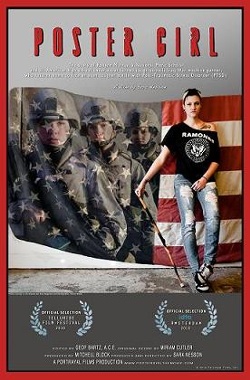
Poster Girl now on Netflix

I had the pleasure of meeting Robynn Murray, the subject of this documentary, almost exactly three years ago. I was living in a community in Western Massachusetts and we were hosting a weekend event on peace. Murray was one of the speakers. About 50 college students were staying in the retreat house that weekend, and they were unloading from cars and vans, five, ten, fifteen at a time, all throughout the night on Friday. My job was to receive them, get them settled in.

She showed up on the porch, very late, maybe close to two a.m., with a friend. I invited them in, groggily, and showed them one of the free spaces left on the floor where they could possibly find enough room to unroll their sleeping bags. They dropped their things, and she asked if she could have some water. We stepped back over the snoring bodies, headed to the kitchen and started chatting, in whispers so as not to wake anyone up. I asked which college she was from.

“I’m not in college.” She said, “I’m Robynn Murray. I’m speaking tomorrow.”

I couldn’t believe it. She looked no different than the kids that had been showing up all night, except with maybe a few more piercings. Of course I apologized and explained that she would be staying in my room on the top floor: there was no way I was going to make her sleep on the floor! She would have the room to herself. She shrugged, like, “Okay. Whatever.”
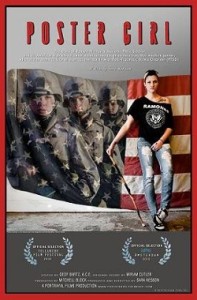
Poster Girl, 2010

Poster Girl, 2010

Her speech the next day was raw, brave, and powerful. She focused a lot on the lies she was told by her recruiter, and she told stories of not just hardship, but regret and disillusion. I have been trying to view the documentary, Poster Girl, for three years, and last night, I saw it on Netflix. It did not disappoint.

While watching it, I couldn’t stop thinking about how young she was when she was in Iraq. A few years ago, when The Hunger Games was getting popular, parents were freaking out because it was about children, children!, killing each other. But the main characters in that book are 15, 16, 17 years old. Is there really that much of a difference between a 16-year-old and an 18-year-old?

 

Not Just About War

These articles from summer 2013 talk about the militarization of local police forces. I’ll never forget a couple of years ago, I was walking through a suburban neighborhood park where I had a plot in a community garden. A cop drove by in a golf cart, not a plain white golf cart, mind you — a camouflage golf cart. Why on earth he needed to be camouflaged was beyond me! The golf cart was clearly made to look like a tank or something but come on: it was a golf cart. I wanted to spray him with my garden hose, but he would probably Tase me, so I didn’t.

Everyone Deserves a SWAT » Postmodern Conservative | A First Things Blog.

“The Department of Homeland Security has handed out $35 billion in grants since its creation in 2002, with much of the money going to purchase military gear such as armored personnel carriers. In 2011 alone, a Pentagon program for bolstering the capabilities of local law enforcement gave away $500 million of equipment, an all-time high” Rise of the Warrior Cop >> The Wall Street Journal


Joshua Casteel (1979-2012)

Be careful, ladies. You might fall in love. And sadly, he’s gone.

Let’s redefine our idea of a “hero.” This man was a graduate of West Point and an interrogator at Abu Ghraib, before he converted to Catholicism and became a conscientious objector. He also wrote a book, Letters from Abu Ghraib.

Once a soldier, now he’s fighting Caesar | National Catholic Reporter.