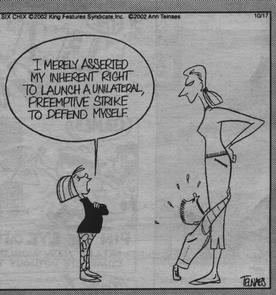
The origin of St. Valentine, and how many St. Valentines there were, remains a mystery. One legend is that he was a Roman martyred during the reign of Claudius during the 3rd century around 270 A.D. The Roman Empire needed soldiers to protect their ever-expanding territories. Claudius had decided that unmarried men made better soldiers, so he decreed that young men could not marry, effectively putting a ban on marriage (one of the defining aspects of militarism: subjecting all interests to the interests of the military). Legend has it that Saint Valentine defied the Emperor’s command and clandestinely married off young couples, leading to his imprisonment and death.
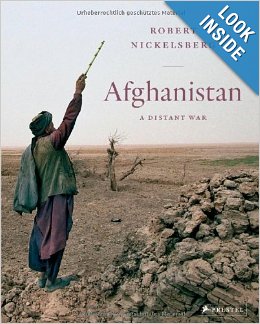
Afghanistan: A Distant War
Noted documentary photographer Robert Nickelsberg’s photographs help bring into focus the day-to-day consequences of war, poverty, oppression, and political turmoil in Afghanistan. Since the attack on the World Trade Center, Afghanistan has evolved from a country few people thought twice about to a place that evokes our deepest emotions. TIME magazine photographer Robert Nickelsberg has been publishing his images of this distant yet all too familiar country since 1988, when he accompanied a group of mujahideen across the border from Pakistan. This remarkable volume of photographs is accompanied by insightful texts from experts on Afghanistan and the Taliban. The images themselves are captioned with places, dates, and Nickelsberg’s own extensive commentary. Timely and important, the book serves as a reminder that Afghanistan and the rest of the world remain inextricably linked, no matter how much we long to distance ourselves from its painful realities.
St. Polyeuctus, Feb. 13
Saint Polyeuctus of Melitene was a wealthy Roman army officer who was martyred at Melitene, Armenia, under Valerian. From OCA.org:
The saint was friend of Nearchos, a fellow-soldier and firm Christian, but Polyeuctus, though he led a virtuous life, remained a pagan.
When the persecution against Christians began, Nearchos said to Polyeuctus, “Friend, we shall soon be separated, for they will take me to torture, and you alas, will renounce your friendship with me.” Polyeuctus told him that he had seen Christ in a dream, Who took his soiled military cloak from him and dressed him in a radiant garment. “Now,” he said, “I am prepared to serve the Lord Jesus Christ.”
Enflamed with zeal, St Polyeuctus went to the city square, and tore up the edict of Decius which required everyone to worship idols. A few moments later, he met a procession carrying twelve idols through the streets of the city. He dashed the idols to the ground and trampled them underfoot.
His father-in-law, the magistrate Felix, who was responsible for enforcing the imperial edict, was horrified at what St Polyeuctus had done and declared that he had to die for this. “Go, bid farewell to your wife and children,” said Felix. Paulina came and tearfully entreated her husband to renounce Christ. His father-in-law Felix also wept, but St Polyeuctus remained steadfast in his resolve to suffer for Christ.
With joy he bent his head beneath the sword of the executioner and was baptized in his own blood.
St Polyeuctus was also venerated by St Acacius, Bishop of Meletine, a participant in the Third Ecumenical Council, and a great proponent of Orthodoxy. In the East, and also in the West, the holy Martyr Polyeuctus is venerated as a patron saint of vows and treaty agreements.
Many pieces of classical music, opera and plays have been inspired by him.

Polyeucte by Paul Dukas
Pierre Corneille, inspired by the account of Saint Polyeuctus’ martyrdom, used elements from the saint’s story in his tragedy Polyeucte (1642). In 1878 it was adapted into an opera by Charles Gounod, with the assistance of the librettist Jules Barbier. Other works based on the play include a ballet by Marc-Antoine Charpentier (1679), and the opera Poliuto (1838) by Donizetti (adapted with Scribe as Les martyrs). Paul Dukas composed his Polyeucte overture, which premiered in January 1892.
from Wikipedia
Above: Léon Escalais sings ” Source dèlicieuse” from Polyeucte by Charles Gounod
with piano recorded in 1906.
Below:
Auteur : Paul Dukas (1865-1935)
Titre : Polyeucte, ouverture pour la tragédie de Corneille (1891)
Interprètes : Roberto Benzi ; Orchestre National Bordeaux Aquitaine
Album : The Sorcerer’s Apprentice
Année : 1987
——————-
Polyeucte, Overture to Corneille’s tragedy. Polyeucte is an overture composed by Paul Dukas in 1891 for the tragedy of the same name by Pierre Corneille. Dukas made his public debut with the first performance of this overture on January 23 1892 at the Concerts Lamoureux.
——————
Today in the Gospel
Mark 7: 1 – 13:
When the Pharisees with some scribes who had come from Jerusalem
gathered around Jesus,
they observed that some of his disciples ate their meals
with unclean, that is, unwashed, hands.
(For the Pharisees and, in fact, all Jews,
do not eat without carefully washing their hands,
keeping the tradition of the elders.
And on coming from the marketplace
they do not eat without purifying themselves.
And there are many other things that they have traditionally observed,
the purification of cups and jugs and kettles and beds.)
So the Pharisees and scribes questioned him,
“Why do your disciples not follow the tradition of the elders
but instead eat a meal with unclean hands?”
He responded,
“Well did Isaiah prophesy about you hypocrites,
as it is written:
This people honors me with their lips,
but their hearts are far from me;
In vain do they worship me,
teaching as doctrines human precepts.
You disregard God’s commandment but cling to human tradition.”
He went on to say,
“How well you have set aside the commandment of God
in order to uphold your tradition!…”
Winning
Chomsky at West Point
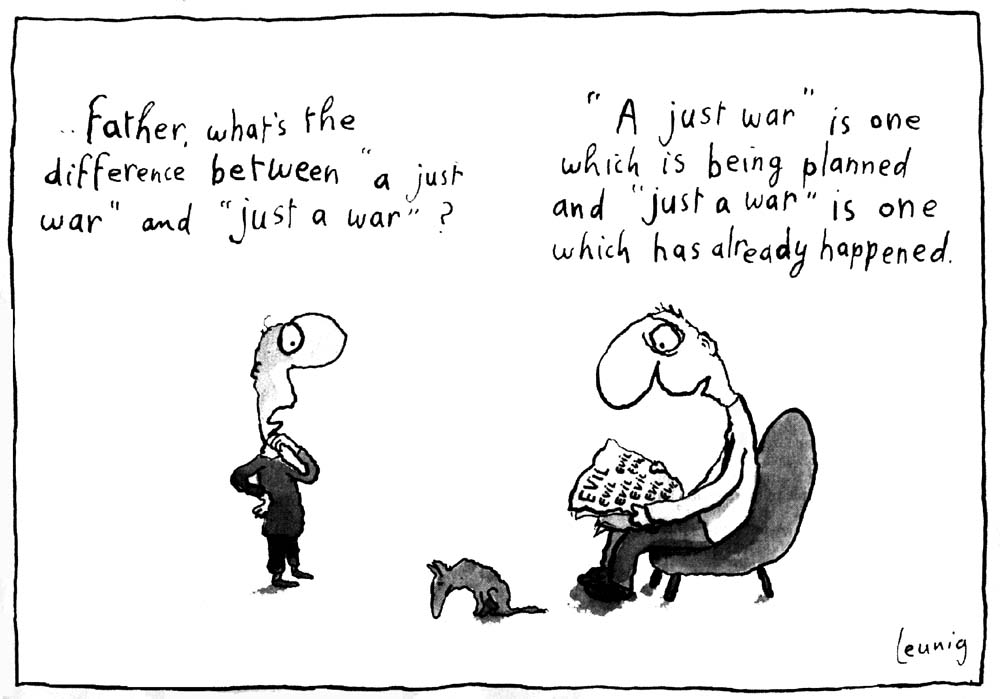
Interesting speech given by Noam Chomsky on “Just War” at West Point in 2006. What is interesting about it is that he traces thought on Just War back to two people, “Hugo Grotius, famed 17th century humanist, who founded the dominant framework of thinking on laws of war” and Rousseau in the 18th century. There is no mention of Saint Augustine or Christianity, though he goes on to outline basic tenets of Christian Just War theory.
Meanwhile, he says, “In brief, my own conclusions are that the literature merits careful attention, but is ultimately not very instructive about just war; secondly, that the notions of human nature should be at the heart of the discussion, although serious inquiry into this is still in its early stages; and third…” Well, I would think that notions of human nature might be something the Church has a little bit of insight on, and might be able to speak to in an inquiry on just war. Yet, Christianity has no place in his discussion. Maybe there is a reason for this.
In his conclusion he states: “…what can one learn from just war theory? My feeling is that from the literature on just war, we learn mostly about the prevailing moral and intellectual climate in which we live.” And he’s right. Christians and Christianity have nothing to offer, it seems, nothing to say, nothing to add to help shape and influence the moral and intellectual climate in which we live when it comes to war. The Vatican seems to have plenty to say about war, but who listens to them? Certainly not Catholics, so why should anyone else? Christianity has become irrelevant on this issue, and it’s not hard to understand why.
Here is the text of Chomsky’s speech.
Waitin’
For your Sunday.
I been standin’ on the rock, waitin’ for the wind to blow
I been standin’ on the rock, waitin’ for my seeds to growI been walkin’ on the ground, waitin’ for the guns to quit
I been walkin’ on the ground, waitin’ for the guns to quit
I been walkin’ on the ground, waitin’ for the pieces to fitbetter get back to the country, look around and find you a home
better get back to the country, look around and find you a home
better get back to the country, that’s where we all come fromI been standin’ on the rock, waitin’ for the wind to blow
I been standin’ on the rock, waitin’ for the wind to blow
I been standin’ on the rock, waitin’ for my seeds to grow (whew!)
I been standin’ on the rock, waitin’ for my seeds to grow
The Ozark Mountain Daredevils’ debut album.
Release date: December 1973
Compact Disc Release circa 1993
Origin: Springfield, MO
Record label: A&M Records
Members: Mike Granda, Dave Painter, Ron Gremp, Nick Sible, Bill Jones, Kelly Brown, Steve Cash, Randle Chowning, John Dillon, Rune Walle, Ruell Chappell, Larry Lee
The Neuroscience of Peace or Violence
Published on August 12, 2012, Guest Host Fr. Emmanuel Charles McCarthy, a co-founder of PaxChristi USA, interviews John Carmody, Director of the Center for Christian Non-violence. This interview comes to you in two parts addressing the subject of “The Neuroscience of Peace or Violence.” In both episodes, John Carmody, a neuroscientist and highly decorated Viet Nam era Marine, explains how the young are recruited into the military at an age when the brain centers of higher reasoning, compassion and empathy are still immature, and while the lower brain functions of aggression and violence more developed and is more susceptible to the training to kill without mercy or conscience. John explains how he became a subjected to the skillful mind games used by the military to recruit him and join the Marines. Both Fr. McCarthy and John Carmody discuss the inherent conflict of the mind of Christ (compassion, forgiveness, empathy) and the mind of a combat soldier ( aggression, violence, conformity, lack of sympathy, survival) and the effort required by the military to subjugate the Christ-like mind into developing “a good soldier.” Can neuroscience help us understand Jesus’ admonition against anger? Watch and find out!
Bill for $666,000
The metal band Skinny Puppy has billed the Department of “Justice” for using their songs to torture prisoners.
“‘We thought we would invoice them properly, so we hit them with the evil numbers of $666,000,’ Keyboardist CeVin Key said during a phone call from New Orleans. ‘We gave them a breakdown of the bill.’
According to a guard, who is writing a book about his Guantanamo experience, guards used Skinny Puppy songs on four occasions. ‘The funny thing is that one of those songs was used on a bootleg,’ Key said. ‘What really bothers us is that they played our songs at an intolerable volume for hours on end. The guards would ridicule the detainees when they defecated or urinated themselves. How can there be a torture camp there? It’s wrong. We’ve found out all about this over a year ago and it just ticked us off.'”
Catechism of the Catholic Church, Part III, Section II:
Respect for bodily integrity
2297 Kidnapping and hostage taking bring on a reign of terror; by means of threats they subject their victims to intolerable pressures. They are morally wrong. Terrorism threatens, wounds, and kills indiscriminately; it is gravely against justice and charity. Torture which uses physical or moral violence to extract confessions, punish the guilty, frighten opponents, or satisfy hatred is contrary to respect for the person and for human dignity. Except when performed for strictly therapeutic medical reasons, directly intended amputations, mutilations, and sterilizations performed on innocent persons are against the moral law.91
2298 In times past, cruel practices were commonly used by legitimate governments to maintain law and order, often without protest from the Pastors of the Church, who themselves adopted in their own tribunals the prescriptions of Roman law concerning torture. Regrettable as these facts are, the Church always taught the duty of clemency and mercy. She forbade clerics to shed blood. In recent times it has become evident that these cruel practices were neither necessary for public order, nor in conformity with the legitimate rights of the human person. On the contrary, these practices led to ones even more degrading. It is necessary to work for their abolition. We must pray for the victims and their tormentors.
Skinny Puppy’s album The Weapon, released in 2013, was inspired by their experience with the DoJ. This video is disturbing, but no more disturbing than what the government is doing in our name. Kind of sad when heavy metal bands are doing more to call out evildoers and evildoing than the Christian Churches.