We Need A Million More

Rory Fanning was a former U.S. Army Ranger in Afghanistan.

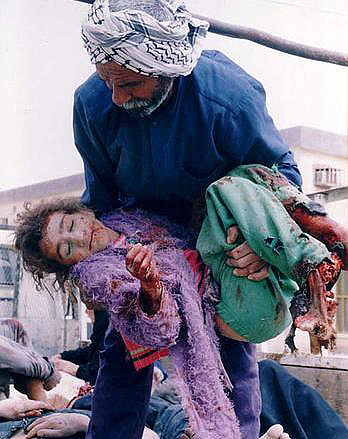
To be honest with you,” Fanning said, “we need a million more Bowe Bergdahls. Anybody who has any degree of common sense or moral fortitude would say, ‘This is ridiculous. I’m not gonna fight this war.’”

Fanning told me, as Musil had last year, that it is not at all easy or in some cases possible to declare yourself a conscientious objector once you are in war.

“I could totally relate to this guy,” he said. “I consider him a hero. To kill somebody for a cause you don’t believe in is potentially worse than being killed yourself, because those scars last forever. Just walking off the battlefield as Bergdahl did seems like an easier route than seeking conscientious-objector status.”

The Nation, March 16, 2015

The Church of the Blessed Sacrament

In the past, I have felt compelled to catalog and record when I have seen what I felt to be evidence of militarism in the Catholic Church. It was a refreshing weekend last weekend when I attended The Church of the Blessed Sacrament as a guest on the Upper West Side of Manhattan. I should catalog also positive experiences!

Instead of wincing and cringing during the Prayers of the Faithful, I was delighted and refreshed. Instead of praying exclusively for soldiers and first responders (agents of the state), we prayed for “all victims of war.” I think the word “victims” is appropriate, and of course this kind of prayer does not implicitly endorse the wars or the choice some make to participate in them. The fact that we are at war was acknowledged several times, but not in such a way that the liturgy could be mistaken for a nationalistic pep rally. The best part was that at the end of the Prayers of the Faithful, the congregation sang a brief version of “This is My Song.” It was beautiful!

THIS IS MY SONG 
(Jan Sibelius - 1899 / Wds Lloyd Stone - 1934)

Finlandia


This is my song, O God of all the nations,
A song of peace for lands afar and mine.
This is my home, the country where my heart is,
Here are my hopes, my dreams, my holy shrine.
But other hearts in other lands are beating,
With hopes and dreams as true and high as mine. 

My country's skies are bluer than the ocean,
And sunlight beams on clover leaf and pine.
But other lands have sunlight too, and clover,
And skies are everywhere as blue as mine.
O hear my song, thou God of all the nations,
A song of peace for their land and for mine.

Chaplain Questions Militarism, Gets Fired

I wish I had heard even one homily like this on a Sunday in the last 14 years, just one. But I haven’t, which is part of the reason we started this site.

In February, Preacher Randy Beckum carefully and respectfully questioned Americans’ increasing love of militarism, in light of Christian truth. The majority of his sermon consists of quotes from Scripture. He is a soft spoken person. He is not being disrespectful to military personnel, nor is he really making any assertions. He is asking questions, simple questions, basic questions — that is all. He is trying to spur thought, trying to “start a conversation.”

That is too much. It was deemed offensive and disrespectful. He was fired. When the kinds of questions he is asking become too controversial for American Christians to tolerate, I think that is a sign that something is wrong, very wrong. Too many American Christians want certain topics to be considered “off limits,” as in “you can’t go there” or “it is wrong to question this.” Violence and war (and participation in war) is the number one topic that they want deemed “off limits.” It seems quite clear to me that they are afraid of the questions: If you ask the questions, they might lead you to the “wrong” conclusions.

But it is never “wrong” to question anything! Inherent in the Christian faith is an ongoing attitude of self-criticism, self-critique. This applies to both our own souls and our country at large. Our religious leaders garner much praise, love and support when they unite us as Christians (and Americans) by demonizing and vilifying the  “other,” whether that “other” be Muslims, liberals, secularists, terrorists, Obama, etc. We feel edified and strengthened through opposition, enmity. But when they urge us to look at ourselves, and within ourselves, we no longer feel united in self-righteousness and mutual admiration and self-congratulatory celebration for our collective awesomeness: We feel disharmony, disagreement, self-doubt, and maybe even if we let ourselves “go there”…shame? guilt? And how can a country stay strong and united if our leaders make us question our own awesomeness? We kill the messenger and feel safer. With that scary voice silenced, we can once again relax, comfortable and settled with our self-justifications.

Sermons like this in civilian life are rare. They are dangerous for the one who delivers them. So, can you imagine a military chaplain giving a sermon like this? All of the pressures that already exist for our religious leaders — pressures to be popular, to be PC, to be accepted and loved by everyone — all of those pressures are only increased exponentially in the even more militaristic culture of the military.

This story apparently became popular over on Reddit, where it made the front page by attracting readers’ attention and receiving over 500 comments. I would like to know what became of this story and whether the Chaplain got his job back, but a quick Google News search shows only exactly one search result: the original story. Apparently, no mainstream media outlets, local or national, have found this story worthy of reporting?

The Horrible Tribe

The Horrible Tribe of the Medina-Ussah

by Thomas R. Eddlem

My name is Husan and I was from Kabul.
And I recall that terrible day of hell,
When the killers painted their name on that shell.
The day Papa was killed during Russian rule.

A boy of just four, I could not read nor write.
But I learned that the bombers weren’t from Russia
She read: it’s the tribe of “Medina-Ussah.”
When I brought the shell to my Meme that night.

I studied all of Islam’s holy Qu’ran
At a madrassah under the Taliban
But try as I might, and try as I could
Of the killing, of deaths I never understood
Why the foreign tribe of Medina-Ussah would.

How could a tribe named after Islam’s second-most holy city
Murder and kill an innocent peddler without pity?
Why would they do this to my home land?
And take the name of Muhammad’s Holy Land?

Years later, the Medina-Ussah returned.
When I was at school, and Meme at table.
New bombs at home with the same hated label
Except for that label, everything had burned.

So I found a job and raised a family,
When I left home, that land of unholy war,
As an orphan in the land of Peshawar.
Though I learned English there, I still didn’t see.

Because I studied Islam’s holy Qu’ran
At a madrasa under the Taliban.
And try as I might, and try as I could
Of the killing, of deaths I never understood
Why the foreign tribe of Medina-Ussah would.

How could a tribe named after Islam’s second-most holy city
Murder and kill my innocent Meme without pity?
Why would they do this to my home land?
And take the name of Muhammad’s Holy Land?

My only son would have turned eight yesterday.
He died instantly, mercifully by the flash
With that evil tribe’s label in the blast crash.
It was an accident, so officials say.

The Medina-Ussah, as Meme would say,
Bombed the child’s school and painted their name on top.
The same words I showed Meme in our bombed shop.
And I read the charred words “Made in U.S.A.”

I have long studied Islam’s holy Qu’ran
And I read English, or my friends say I can.
So with all my might, I still don’t understand.
Why all the killing and the drone strikes unmanned?
Collateral damage, the evil tribe’s brand.

This tribe was not named after Islam’s second-most holy city
But they still murdered and killed without pity.
Why would they do this to my new land?
Why does “Made in U.S.A.” take such a stand?

***************
Tom Eddlem writes for The New American and he is a U.S. history teacher in a Catholic high school south of Boston.
Holy Year of Mercy

JUBILEE-YEAR-OF-MERCY

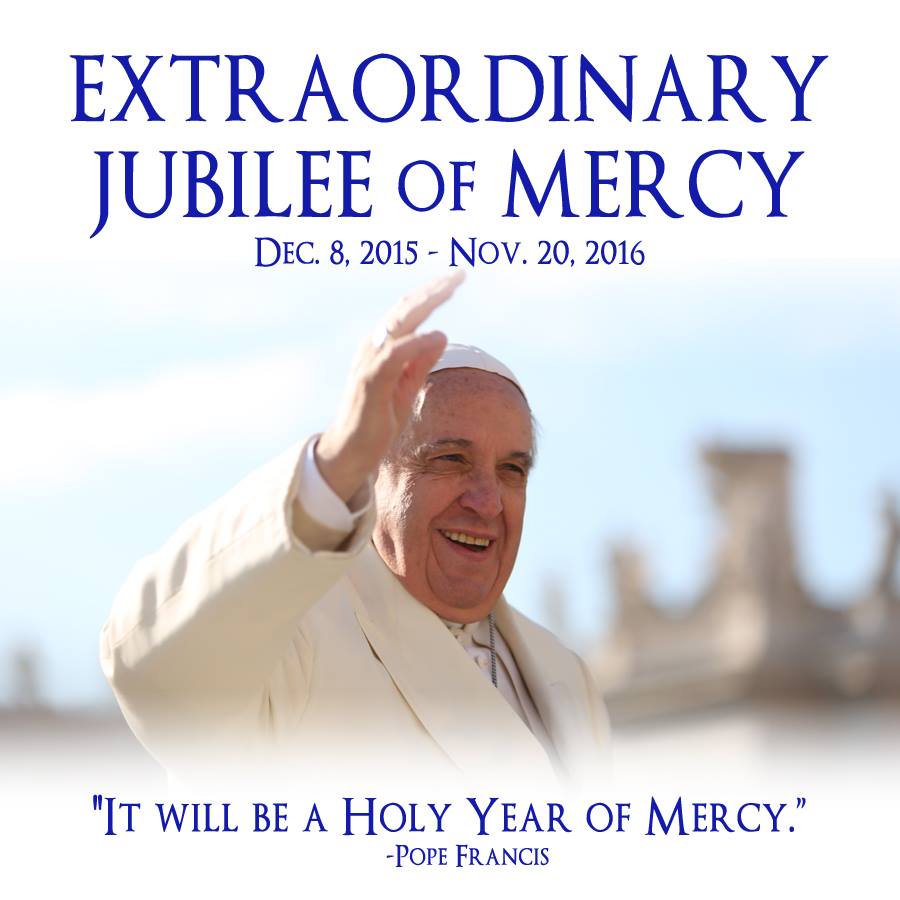
Upon the announcement of a holy year of mercy to start on December 8, 2015, some recommended reading: Dives in Misericordia (Rich in Mercy), Pope John Paul II, November 30, 1980.

And yet, it would be difficult not to notice that very often programs which start from the idea of justice and which ought to assist its fulfillment among individuals, groups and human societies, in practice suffer from distortions. Although they continue to appeal to the idea of justice, nevertheless experience shows that other negative forces have gained the upper hand over justice, such as spite, hatred and even cruelty. In such cases, the desire to annihilate the enemy, limit his freedom, or even force him into total dependence, becomes the fundamental motive for action; and this contrasts with the essence of justice, which by its nature tends to establish equality and harmony between the parties in conflict. This kind of abuse of the idea of justice and the practical distortion of it show how far human action can deviate from justice itself, even when it is being undertaken in the name of justice. Not in vain did Christ challenge His listeners, faithful to the doctrine of the Old Testament, for their attitude which was manifested in the words: An eye for an eye and a tooth for a tooth.”111 This was the form of distortion of justice at that time; and today’s forms continue to be modeled on it. It is obvious, in fact, that in the name of an alleged justice (for example, historical justice or class justice) the neighbor is sometimes destroyed, killed, deprived of liberty or stripped of fundamental human rights. The experience of the past and of our own time demonstrates that justice alone is not enough, that it can even lead to the negation and destruction of itself, if that deeper power, which is love, is not allowed to shape human life in its various dimensions.